
Violin
Composition
Improvisation
Shows
Links
Biography
Research
Research Group
C.V.


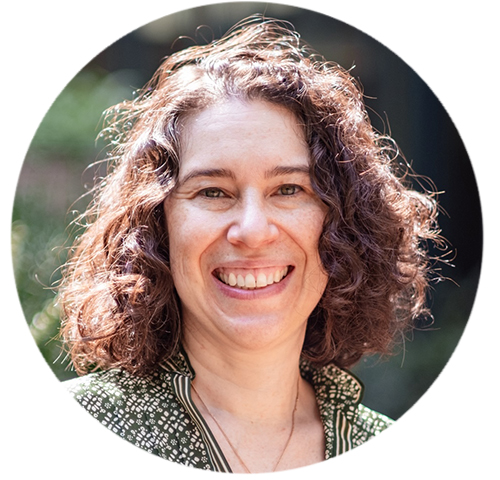
I am an assistant professor at the Department of Music at Cornell University. I work at the intersection of musicology and the histories of music theory and science. Most of my published research thus far has focused on the interrelations of music, mind, and body during the emergence of modern European musical cultures; my current work extends these questions back to the medieval period and up to the present, with a focus on the interplay between understandings of the cognition of music and contemporaneous philosophical and psychological theories. My recent book, Hearing with the Mind: Proto-Cognitive Music Theory in the Scottish Enlightenment, (Oxford University Press, 2025) explores the life and music-theoretical writings of the Glasgow-based merchant potter John Holden (1729–1772). Holden was the earliest musical thinker to provide an explicit psychological account of how our minds perceive music, or, as he put it, an explanation for why “the ear chooses and refuses” musical sounds. His was a radically new account of musical perception: a phenomenological explanation of tonality as a product of the collaborative effort of the mind’s faculties that is still relevant today. The book then turns to Walter Young (1744–1814), whose adaptation of Holden’s method to rhythm reflects the Scottish Enlightenment’s approach to the problems of universalism and relativism, and Young’s sister, Anne Gunn (1756–1811), who likewise developed Holden’s ideas in her Musical Games (1801), a complex set of games designed to teach children the rudiments of music theory.
My current book project, Unconscious Music: Habit, Possession, and other Automaticities, investigates the well-known but little discussed fact that the activity of performance requires that musicians not attend to their own actions. Other ongoing projects include The Attentive Ear: Sound, Cognition, and Subjectivity, co-edited with Francesca Brittan, which will be published by the University of Pennsylvania Press in September 2026, and Thinking Music: Global Sources for the History of Music Theory, a digital anthology co-edited with Thomas Christensen and Lester Hu, which is forthcoming with the University of Chicago's Online Press Service, CORPUS.
Before coming to Cornell, I spent three years as a postdoctoral research fellow at the Columbia Society of Fellows, followed by six years as the Leader of the “Histories of Music, Mind, and Body Research Group” at the Max Planck Institute for Empirical Aesthetics in Frankfurt. My research has been supported by the Whiting Foundation, the Arts and Humanities Research Council, the Baden-Württemberg Landesstiftung, the Max Planck Gesellschaft, and the University of Chicago Neubauer Collegium. Recent distinctions include a 2024 emerging scholar award (article) from the Society for Music Theory, the 2025 Society for Music Theory's Diversity Syllabus award, the 2025 Diana McVeagh Prize for Best Book on British Music from the North American British Music Studies Association, and a 2026 Cornell Graduate Excellence and Impact Faculty Champion Award.
In my early twenties, I was active as a composer and performer. As a composer, my music was performed by the Arditti, Molinari, Carmel and Pacifica Quartets, and the Kammerakademie Potsdam. On violin, I was featured as a chamber musician at Carnegie Hall, the Concertgebouw, and the Kennedy Center, and regularly performed with the Israel Contemporary Players, the Israel Contemporary String Quartet, the Ensemble Modern Academy, and the Meitar Ensemble at a variety of international music festivals. I was concertmaster of the West-Eastern Divan Orchestra, and was a member of the Lucerne Festival Academy Orchestra and the Gustav Mahler Jugendorchester, touring across Europe and Asia under the batons of Boulez, Barenboim and Abbado. I also enjoyed improvising, and collaborated with Jason Lindner, Omer Avital, Eran Zur, Victoria Hanna, and Yoyo Ma's Silk Road Project among others, at festivals including the Winter Jazz Fest, the Lincoln Center Out of Doors Festival, the Charlie Parker Jazz Festival, and the BRIC Jazz Festival. Various aspects of these experiences inspired my academic path and continue to inform my research interests.

All graphic images in this website were adapted from cartoons by J. J. Grandville (1803-1847).